Wednesday, 29 December 2010
Mise en-scène
Tuesday, 28 December 2010
Use of the camera
Monday, 27 December 2010
Sound
Early films were silent, but sometimes had live music accompanying them. The first film with sound, or 'Talkie', was 'The Jazz Singer' in 1927. Film companies at this time were unwilling however to use sound as it was expensive, and they were making huge profits still with silent films. It wasn't until 'Lights Of New York' in 1928 that sound properly took off in films.
Diegetic and Nondiegetic sound
Diegetic sound is sound which is part of the film world, for example, sound effects, dialogue and music from a source that can be seen within the film world. Diegetic sound occurs on and off screen, if it can be heard by the characters, it is diegetic on or off screen.
Nondietic sound is sound which is not part of the film world, for example, background music or voice over. Nondiegetic sound is sound which only the audience can hear.
Sound bridges
A sound bridge is when a sound is played during the end of one scene, that is part of the following scene, or vice versa. It creates a smooth transition between the two scenes.
Parallel and Contrapuntal sound
Parallel sound is sound which fits what is happening on screen, for example, if we are shown children playing in the park on a sunny day we expect to hear happy voices and laughing, and light-hearted happy music, or if we are shown a battle screen we expect to hear shouting, gun shots or cannons or sword hitting each other.
Contrauntal sound is sound which doesn't fit the image on screen, for example, if we are again shown children playing in the park on a sunny day, rather than the happy voices and light-hearted music, the music would be more sinister, as would the noises.
Friday, 24 December 2010
Colour
Sunday, 19 December 2010
Lighting
Main sources of lighting
The Key light is the brightest and most influential
The Back Light helps counteract the effect of the key light, making the character/object look 'rounded'
The filler light helps soften the shadows created by the key and back lights. More than one can be used.
The key light can be directed from different angles, creating different effects:
Under lighting is when the main source of light comes from below the subject. This creates a distorting effect, and if often used in horror movies.
Top lighting is when the main source of lighting comes from above the subject. It highlights the features of a character, and can be used to create a glamorous look in a star.
Back lighting is when the light source comes from behind the subject. It little or no other lighting is used, silhouettes are created.
High-key and low-key lighting
Low-key lighting is created by using only the key and back lights. This produces a sharp contrast between the light and dark areas making distinct shadows. It is also called Chiaroscuro.
High-key lighting is when more filler lights are used, making the subject more realistic to our eyes. It can be used to show brightly-lit sets such as a sunny day in a park, or to show more subtly-lit night scenes.
The difference between high and low-key lighting is that the difference between the light and dark areas are not so pronounced in low-key lighting.
Film Noir
Film Noir (Noir meaning black in French) is the term given by French critics to American films in the late 1940s and 1950s due to the dark subject matter and the visually 'dark' look of the film. The main features of Film noir is the use of low-key lighting which gives the film a hard sharp look with strong areas of contrast between the light and dark areas. The lighting on the actor's faces suggests the darker side of human nature. Another common feature is to have parts of the set cast shadows across the scene creating a sense of mystery. Many of these films were made on a limited budget, and the lighting meant cheaper sets could be used, which creating a sense of style at the same time.
Friday, 17 December 2010
Storyboard for our thriller opening
- The party scene
- The park scene
- The murder scene
Tuesday, 14 December 2010
Final survey monkey results
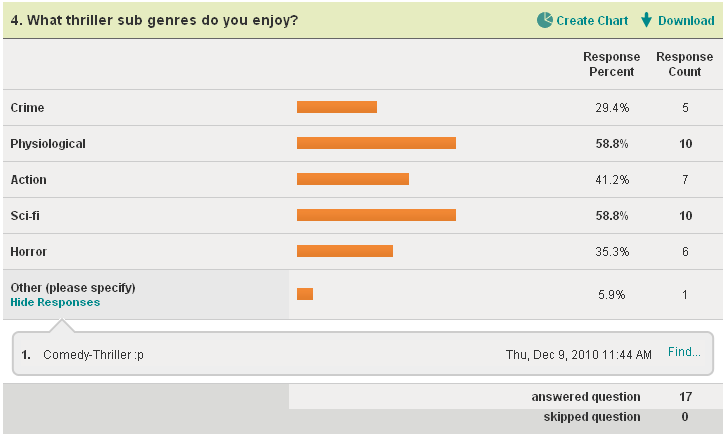
From my results I can see that most people enjoy physiological and sci-fi thriller movies. The answers I recieved to this question also shows how some people taking my survey were uncooperative, with the answer of 'Comedy-Thriller :p'. This shows that maybe it would of been best if i tried not to ask people I know to fill in my survey.
From these results, it seems that most people enjoy twists in the storyline most in the thriller genre, and they don't really enjoy Good overcoming evil, which may mean that this particular aspects of the thriller genre has taken place of often, people feel as though it goes without saying. From people's own answers, we can see that some enjoy enigmas, and we can also see another case of someone being unprofessional.
From this reulst I can see that the most popular movie with the 17 people who took my survey was Se7en, followed by Casino Royale and Psycho. Also from some of the answers, theres further eveidence of people being uncooperative by putting 'Bugs Life' and one person proved my point of not advertising on sites with people i know by putting the answer 'I dunno, do your own work Louiseeee =P'
Monday, 13 December 2010
Title sequences
Se7en
The title sequence of Se7en cuts the action up.
Panic room
The titles of Panic room appear as the setting of the movie is shown.
The brave One
The productions companies appear first, and the rest of the titles show a while the start of the movie plays.
Collateral
The movie starts straight away, and the title are held back for several minutes.
Green Zone
Some titles are shown at the start such as the production companies, but the main titles are held back for several minutes.
From watching these openings, and from openings of many other movies we have seen, we learned what is shown during the title sequence, and roughly what order they are shown in:
- Production companies with their indents
- 'A film by' with directors name
- The main stars of the movie
- Other stars in the movie
- Some of the main people who helped make the movie
- The director
Sabotage and North by Northwest
Sabotage

North by Northwest
http://www.youtube.com/watch?v=M5D1aeNB2Bc
Thursday, 9 December 2010
Survey monkey results/repost
North by north west and Vertigo
North by northwest
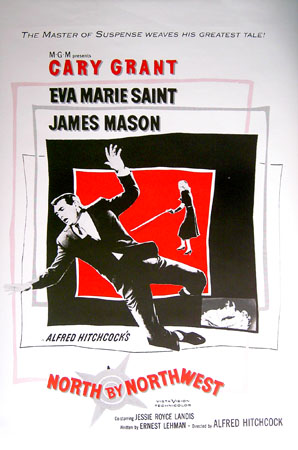
The opening titles are on a green grid, just as the movie starts it changes into skyscraper windows, this is a Graphic match as the lines of the green grid match with the window frames. We then meet the main character, Roger Thornhill. He is fast talking, which shows he is busy. He works in advertising, and so the fact he is fast talking is a sterotypical characteristic of someone who works in advertising or on a newspaper. He is also dressed very smart, which further shows he must be an advertiser as advertisers have to get an image across, just like he is doing from the way he's dressed. The plot of the story starts right away, the plot being he is mistaken for someone else and kidnapped, this further shows his busy life and nature.
Monday, 6 December 2010
Alfred Hitchcock's 'Shadow of a doubt'
The opening introd


Saturday, 4 December 2010
Our thriller movie ideas
Our main idea was that a couple would be Skypeing each other at their homes.
whole thing via skype. After the death, the mystery killer would then send his message of death on to the female on the other side.We came up with a few possibilities for our title:
- Nowhere left to hide
- Sleep-bag
- Skype
- Send
- A skype account
- Web-cam
- Room
- A weapon
- Actors/actresses
Thriller movie settings and weapons
Research into what to put in our thriller movie
- Jaws
- Snakes on a Plane
- Speed
- Shutter Island
- Psycho
- The Bourne Identity
- physiological
- action
- horror
- mystery
- Teenagers
- Young adults
- Action
- Exciting
- Suspense filled
- Red herrings
- Enigmas
Tuesday, 30 November 2010
Survey monkey
I posted a link to my survey on some sites I use often.
Here is my post on Facebook

My post on the McFLY Super City
I chose to advertise my survey on Twitter as I have my close friends as followers, and so they are very likely to fill in my survey as they know it is important that I have people fill it in. I advertised on Facebook as I have many people from my school, many of which also do media studies, and so they will understand how important it is. I chose to advertise on the McFLY Super City as there are a few under 20,000 other users, all of which can see my posts.
I will check my results later today to see if anyone has done it, and post the links again. I will continue with this for the next few days, and if I have enough answers I will then post the results.
Here is the link to my survey:
http://www.surveymonkey.com/s/GXPWQZS
Thursday, 25 November 2010
Preliminary exercise
This was my groups Preliminary exercise. Billy Cove and Myles Wilson are the actors in it while myself and Jessica Wallin Directed the scene.
We firstly made a storyboard of what we was to film. We decided that the scene would be of person A (Billy) walking into a room to find person B(Myles), and A would declare their love for person B, who would the walk out on person A.
In the scene we used diegetic sound, such as the dialogue ad the door closing, as well as a range of shots. A long shot was used at the start to show the setting, point of view shots of both characters, as well as midshots to show their facial expressions clearly and so show they're emotions, and to show this from the characters' position. A close ups was also used when person A leans against the door to show the pain and upset on their face of being left.
We then as a groups edited the video, and added the opening credits.
There were some mistakes with the video, the shots f the characters faces when they were talking before person B got up were blurry as the camera was too close to the actors, and so when the camera zoomed it it distorted the image. This also happened near the end of the video when the camera zoomed into person A's face. The editing was also jumpy when person B stands up, and at the end when person A leans against the door. This is mainly due to the fact we have had limited use of the editing software, Final cut express. However, as we will be using the software frequently, we will improve and so out editing skills will continue to develop.
Our storyboard for our Preliminary exercise
We did a preliminary exercise to practise using the cameras and the editing software, final cut express.
In our preliminary exercise we will use a range of shots, such as
-A close up of the characters faces as they talk to show emotion
-Point of view shots to show what its like from the characters perspective
-Over the shoulder shots
-Medium shots
-Long shot to set the scene
Thursday, 21 October 2010
What did we learn from our video?
From our research we found out that audiences like that thriller movies are full of suspense, which make the audiences interested all the way through.
Analysis of the technical quality of the video
The only thing that could be improved is the position of the people within the shot. At times, you could see a large height difference between the people, and so next time we should try and make sure the height difference is less. Also, the interviewer takes large pauses between asking the questions, this makes the video look very unprofessional. Some of the answers to the questions were also rushed, and makes it look as if the answers had bee rehearsed and un-natural
How and why was the video produced
To do this, we chose a spot to film in. We chose the spot we filmed in as it was outside, and so would be quieter than it may of been inside, and there was better lighting. We then set up the camera started filming. We then fund some people to interview and asked the people we interviewed 3 different questions;
1) What's your favorite thriller?
2) What do you like about the thriller genre?
3) What makes a great thriller?
From this, will be able to see what audiences like in a thriller film, and then use this in our own thrillers.
Monday, 18 October 2010
My favorite thriller moive
One of the mian things I like about the movie is the use of enigma used throughout the movie. Throughout most of the movie it is unclear who the person who murdered Marion. When Marion and Norman Bates are having dinner in his office, the way he speaks of his mother and what happened to her husband, we get the impression that he is the villain in the film. However, this later changes when we see the death of Marion as we see the back of the mystery person, who resembles an older woman. We further believe this later on when we once again see this old woman kill detective Milton Arbogast. We only know that it was in fact Norman Bates when we see his face as he attempts to kill Marion's sister, Lila and we see that his mother is in fact dead, and Norman Bate's dressed as his mother.
My favourite bit of the movie has to be the iconic 'shower scene' as despite the lack of special effects that modern films are full of, the murder still manages to be terrifying
Friday, 15 October 2010
Analysis of thriller openings
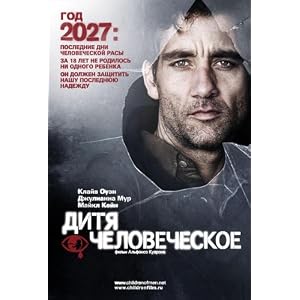
The scene starts of with a blank screen with voice overs of various people making news reports, the last one being about how the youngest person has died. This already makes the audience interested in the movie, they want to know why people have stopped having children. The next scene shows a group of people in a coffee shop all staring at something which we believe to be a tv, in shock and horror. This further adds to the mystery of what has happened as the audience now wants to know why the someone dying is so bad. The fact that the man who enters the shop has to push his way though the crowd, and the looks they give him further shows the shock and horror of the events they are watching. The whole opening is very quiet with only the sound of the news reporters, man asking for a coffee and noises of the traffic, so when the explosions occurs it makes it even more surprising.
Memento
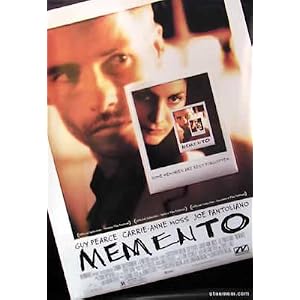
The opening shows a photograph of a murder scene, being held by a mystery person. As time goes on, the photo un-develops, at which point the audience realises it is going back in time. This gets the audience's interest as they now know that they will see the murder from the photo. After the photo had finishes un-developing, the audience sees the the person who has been murdered on the floor, and this too goes back in time as we see the blood of the person flow back to his body.This horrifies the audience as not only have the witnessed a murder which is disturbing, but in reverse which is not what is usually expecting. After this we finally see the murderer, but by this time the audience is not as worried as to who he is, but why the murder was shown in reverse.
A history of violence
The start shows two men in a car outside a motel talking. The only other sound heard is that of insects. This creates a calm and desolate scene. The men talk calmly which further adds to this. When one of the men enters the motel again, the audience sees blood, and then a murder scene. The man walks calming past it all to get some water. This is unnerving as this isn't the usual reaction you would expect when someone sees a murder scene. This automatically makes the audience realise that the reason for this must be because the man was expecting it, and so must of committed these murders. A young girl then comes of of a room, we know she has seen the dead bodies as she is crying, the man then crouches down and tried to silence her crying. The fact her once again does this all so calmly is unnerving, and we know that the man is abut to do something horrifying. The man then takes a gun out, and points it at a girl, which really horrifies the audience. Just as the shot if fired however, the frame changes, and so we don't know if the girl was shot or not. This makes the audience interested in the movie as they want to know if the girl was killed or not.
Sunday, 10 October 2010
Thriller conventions
1.A crime at the core of the narrative (often murder, but not always)
2. A complex narrative structure, with false paths, clues and resolutions
3.A narrative pattern of establishing enigmas (problems) which the viewer expects to be resolved
4.A protagonist who is systematically, disempowered and drawn into a complex web of intrigue by an antagonist.
5.Extraordinary events happening in an ordinary situation
6.Themes of identity
7.Themes of mirroring
8.Themes of voyeurism
9.Protagonist with a "flaw" which is exploited by the antagonist
10. Titles often reflect an aspect of the protagonist/antagonist's psychological state
11. There is often a scene near the end of the film in which the protagonist is in peril
Sunday, 3 October 2010
Thriller devices
Macguffin
This is a plot device which motivates the characters and builds up the story but has no or little relevance to the rest of the story.
Enigma
This is a puzzle, like a riddle or something mysterious or inexplicable. The audience will try to figure it out, and so it keeps their attention to the movie as they wish to find the answer. In thrillers this is commonly something which the protagonist has to try and solve before the narrative is resolved and the film finishes.
Red Herring
This is a device which is made to divert the audience from the truth or an item of significance. It can work with other devices to further create suspense.
Friday, 24 September 2010
'No country for old men' opening analysis
The movie starts with long shot views of the area, setting the scene. As the scene goes on, the area gets brighter and brighter due to the sunrise, and reveals more and more of the setting. This is reflected later in the opening. We then see a man being arrested, but you don't see his face, and he is also wearing black which further contributes to the mystery of this man.
In the next scene we see a police station. The police officer from earlier is on the phone in the foreground, while in the back ground the mysterious man gets up, but the audience doesn't notice this as he is out of focus, and so the audience focuses on the police officer, so when the man attacks the police officer they are shocked. This is the first time we see the man's face, and more is revealed about him, like the setting in the first scene, as rather than him being a mysterious man in black we now know he is a killer.
In the next scene we see the guy, after killing the police officer, pull over another driver. Going on what happened before, the audience knows that he is going to kill this other man. This is also further shown when he is talking to the man in the car as when he smiles it seems very sinister. Like the police earlier, the attack, even though the audience is expecting it, happens suddenly, and shocks the audience.
Saturday, 18 September 2010
What is a thriller?
Friday, 17 September 2010
The Brief
I will record my progress of the coursework on this blog.